
How Much Water Should Drain From My AC?
In a DFW summer, a healthy air conditioner drains somewhere between 5 and 20 gallons of water a day, and every drop of it should end up outside. That surprises people. The number sounds high until you remember what your AC is actually doing in July: it isn’t just cooling the air, it’s wringing the humidity out of it, and all that moisture has to go somewhere.
Over the last 12 months, we delivered nearly 20,000 service appointments for more than 6,800 households across the DFW area and questions about dripping water is one of the calls we field most in the cooling season. The short answer is that water outside is normal and water inside is not. The longer answer, the one that tells you whether you can ignore it or need to shut the system off, is what the rest of this walks through.
Where the Water Comes From in the First Place
Understanding what’s normal starts with knowing where the water comes from, because once you picture it, the whole thing makes sense. Warm, humid air from your house gets pulled across the cold evaporator coil inside your air handler. The same way a glass of iced tea sweats on a hot day, moisture in that air condenses on the coil and drips down into a pan underneath it, the condensate pan.
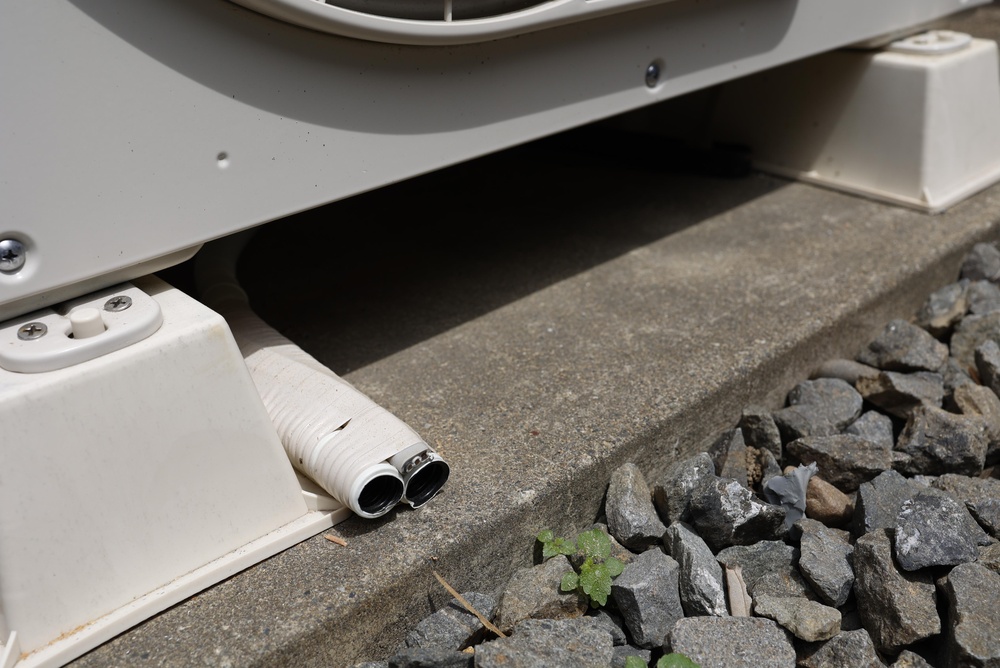
From there it runs out of your home through the condensate drain line, a length of PVC that carries the water outside, usually dumping it near your outdoor unit or into a drain. That’s the entire system. A coil that makes water, a pan that catches it, and a line that carries it away. When all three are working, you get a small puddle outside and never think about it. When one of them fails, the water backs up and finds another way out, and that’s when it shows up inside.
What’s Normal in July vs. November in DFW
Here’s the part most articles skip, and it’s the question behind a lot of the calls we get: how much dripping is too much? The honest answer is that it depends heavily on the season, because your AC’s water output tracks the humidity outside.
In July and August, when DFW is running 70 to 90 percent humidity on a muggy morning, 5 to 20 gallons a day is completely normal. On the worst dog-day afternoons a hard-working system can push past that. If you see a steady trickle outside during a humid stretch, that’s a sign the system is doing its job, not failing at it.
In late spring and fall, on a mild, dry day, that same system might barely produce a cupful. Less humidity in the air means less moisture to pull out, so less water to drain. Homeowners sometimes call worried that their AC “stopped draining” in October, when really the air just got drier.
So before you assume something’s wrong, check the weather. A dry drain line on a dry day is fine. A dry drain line during a humid July afternoon while the system runs nonstop can actually point to a different problem, a clog backing the water up somewhere it shouldn’t be.
The other seasonal note worth knowing: none of this normal dripping should ever come from your outdoor unit during the cooling season. Which brings up a distinction that trips a lot of people up.
Water Outside vs. Water Inside vs. Water at the Outdoor Unit
Three very different situations get lumped together as “my AC is leaking,” so let’s separate them.
Water draining outside near the condensate line
Normal. This is the system working exactly as designed. A patch of damp ground or a small puddle near where the white PVC pipe exits your house is nothing to worry about.
Water pooling inside your home
Not normal, and worth acting on. If you see water around the indoor air handler, dripping from a ceiling below an attic unit, or pooling near an indoor unit in a closet or garage, something in the drain path has failed and the water is finding the next lowest point. Shut the system off.
Water or ice at the outdoor unit in summer
Also worth a look. Your outdoor condenser shouldn’t be producing condensate in cooling mode. Water or ice out there usually points to something else, low refrigerant or an airflow problem freezing the system up, and it’s the kind of thing our AC repair techs run down at the coil. (If your system is a heat pump, some water at the outdoor unit in winter is normal defrost, but that’s a cold-weather situation, not a summer one.)
Why Your AC Is Draining Water Inside: The Usual Causes
When water shows up inside, it’s almost always one of these, and this is roughly the order we check them on a service call.
When the condensate drain becomes blocked
This is the number one cause we see, by a wide margin. That drain line is dark, damp, and warm, which is a perfect environment for algae and slime to grow inside it, and in DFW humidity it builds up fast. Once the line clogs, the water has nowhere to go, so it backs up into the pan and overflows.
Many air conditioning systems include a float switch that automatically shuts the unit down when the condensate drain becomes blocked. Instead of a visible leak, you may simply notice the AC refusing to run. Water collecting in the drain pan is often a strong sign that the condensate line needs to be cleared.
When the drain pan can no longer contain water
The pan sits under the coil to catch condensate. On older systems the metal rusts through, or a plastic pan cracks or shifts out of position, and water drips straight past it. Sometimes the pan is fine but overflowing because the line below it is clogged, which loops back to the cause above.
When ice turns into an indoor leak
This one’s counterintuitive: too little airflow or low refrigerant can make the coil freeze into a block of ice. While it’s frozen, you might get no water at all. Then the system shuts off, the ice melts all at once, and it overwhelms the pan and drain, sending water everywhere. A dirty air filter is the most common trigger, so if you’ve got water inside and a filter you can’t remember changing, that’s a strong lead.
When the condensate pump stops moving water
If your air handler sits in a basement or a spot below the drain exit, it relies on a small condensate pump to push water up and out. When that pump fails or its own little reservoir clogs, the water backs up and spills. Not every home has one, but if yours does, it’s on the list.
What To Do Right Now If Water Is Draining Inside
If you’ve got water inside, here’s the move, in order:
- Turn the system off at the thermostat. Running it while it leaks just adds water and risks the compressor if a coil is frozen.
- Mop up standing water near the air handler so it doesn’t reach drywall, flooring, or the ceiling below.
- Check your air filter. If it’s filthy, replace it. A choked filter is behind a surprising share of freeze-ups and the leaks that follow.
- Look in the drain pan. Standing water there confirms a drain line clog rather than a pan or coil problem.
- For a light drain clog, a wet/dry vac held to the outdoor end of the condensate line can pull the blockage clear. For a stubborn or recurring one, it’s worth a call before the backup finds your ceiling.
What we’d steer you away from is running the system and hoping it sorts itself out. Indoor water doesn’t resolve on its own, and the damage from a slow leak into drywall or a ceiling costs far more than the drain clearing that would have prevented it.
Keeping the Drain Clear: What Actually Prevents This
The condensate line is the single most neglected part of an AC system, and it’s also the easiest to stay ahead of. A couple of things help. Flushing the line keeps the algae and slime from building into a full clog. Some homeowners pour a bit of distilled vinegar down the line access a few times during cooling season to keep it clear, which works as a stopgap.
The more thorough version happens during a seasonal AC maintenance visit, when we clear the line properly, check the pan and float switch, and make sure the whole drain path moves water the way it should before the humid months hit.
One Cold-Weather Note: Condensate Lines and Freezes
DFW gets a hard freeze or two most winters, and it catches people off guard when it hits an AC drain. A condensate line that runs through an unconditioned attic or exits on the north side of the house can freeze if there’s still water sitting in it.
A frozen line is a blocked line, so if you run your system on an unseasonably warm winter day right after a freeze and get a backup, this is often why. It’s a minor issue, but it’s the kind of thing that surprises homeowners who assume drainage problems are a summer-only concern.
When To Call a Pro
Plenty of this is fair game for a homeowner. Changing the filter, clearing a light drain clog with a shop vac, and mopping up while you sort it out are all reasonable. Where we’d rather you call:
- The drain keeps clogging no matter how often you clear it, which usually means a slope or install issue in the line itself.
- The coil keeps freezing, which points to low refrigerant or an airflow problem that needs diagnosis.
- Water is coming from the outdoor unit in summer, or you see ice on the refrigerant lines.
- There’s water near your ceiling or drywall, where waiting turns a cheap fix into a repair job.
Refrigerant and coil work in particular takes EPA-certified equipment and isn’t a DIY project. If the simple checks don’t sort it out, shutting the system off and getting a professional AC repair beats letting it run and cause damage.
Frequently Asked Questions About Water Draining from AC
How much water should my AC drain per day?
In peak DFW summer, 5 to 20 gallons a day is normal, and a hard-working system on a very humid day can exceed that. All of it should drain outside. The amount drops sharply in mild, dry weather because there’s less humidity for the system to remove, so seeing less water in spring or fall isn’t a problem.
Is it normal for water to drip outside from my air conditioner?
Yes. Water draining outside near the condensate line is exactly how the system is supposed to work. A small puddle or damp patch near where the PVC line exits your home is normal. It only becomes a concern when water shows up inside instead.
Why is my AC leaking water inside my house?
The most common cause is a clogged condensate drain line backing up, followed by a cracked or overflowing drain pan, a frozen evaporator coil that melts all at once, or a failed condensate pump. Turn the system off and check the air filter and drain pan first, then get it looked at if the cause isn’t obvious.
Why is my AC not draining any water at all?
On a dry, mild day that can be completely normal, since there’s little humidity to remove. During a humid summer stretch with the system running, though, a bone-dry drain can mean the line is clogged and backing the water up somewhere else. Check the drain pan for standing water to tell the difference.
Can a clogged AC drain line make my air conditioner shut off?
Yes, and this catches a lot of people. Most systems have a float switch that senses the drain backing up and shuts the AC off to prevent a flood. So a clogged line often shows up as a system that “turns off by itself” rather than an obvious leak.
How do I prevent my AC drain line from clogging?
Keep the air filter fresh so the coil stays clean, and flush the line periodically during cooling season. The most reliable prevention is a seasonal tune-up that clears the line and checks the pan and float switch before the humid months, which is why so many DFW homeowners fold it into a maintenance plan.
AC Drainage Help Across Dallas and DFW
A little water outside your air conditioner in July is a sign it’s working. Water inside your home is a sign something in the drain path has given out, and it’s worth catching early before it reaches your drywall or ceiling.
A leaking air conditioner often points to a clogged drain line, frozen evaporator coil, or another issue that needs professional attention. For more than 65 years, we’ve helped homeowners across the DFW area restore reliable cooling, and our emergency plumbers are available when fast action is needed.
Call Frymire Home Services at (972) 367-0004 or contact us online today to schedule AC service in Dallas, TX.