Why Does My AC Keep Blowing Fuses or Tripping Circuits?

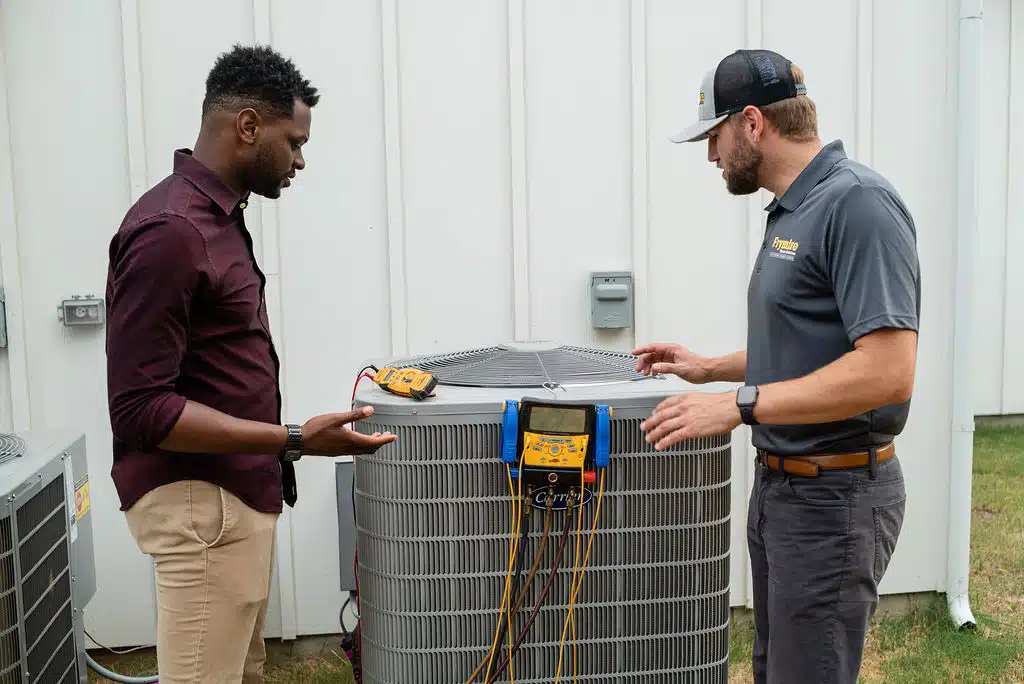
If your air conditioner keeps tripping a breaker or blowing a fuse, the first concern is not getting the AC running again. It is finding out why an electrical safety device keeps shutting it down. Frymire Home Services approaches these calls by looking at both sides of the problem: the electrical circuit supplying the equipment and the HVAC components drawing power from it.
That perspective comes from seeing a lot of North Texas homes and cooling systems firsthand. Over the past year alone, our technicians completed 19,799 jobs for 6,862 DFW households, serving homeowners from Denton and Plano to Dallas and Fort Worth. When an AC starts repeatedly tripping a circuit, that experience helps us know where to look first and why repeatedly resetting the breaker is not the answer.
If your AC keeps blowing fuses or tripping a breaker, call (469) 200-2305 or contact us online to schedule AC service.
Quick Answer: Why an AC Trips a Breaker or Blows a Fuse
An AC usually trips a breaker or blows a fuse because something is drawing too much current or creating an electrical fault. The most common causes are a failing compressor, a bad capacitor, a condenser fan motor problem, loose or burned electrical connections, shorted wiring, and equipment overheating under heavy load.
The timing of the trip, whether right at startup, a few seconds in, or after several minutes, helps narrow down which one it is. Do not keep resetting the breaker or install a larger fuse, and leave the system off until it has been diagnosed.
First Rule: Do Not Keep Resetting a Tripped AC Breaker
A circuit breaker is a safety device, not an on/off switch for troubleshooting. If it trips repeatedly, something is causing the circuit to pull too much current or creating another electrical fault. Continuing to reset it can expose wiring and HVAC components to additional heat and stress.
The same rule applies to a blown fuse at an AC disconnect. Never replace it with a larger fuse because the original keeps blowing. Fuse and breaker sizes are matched to the circuit and equipment they protect. Increasing that protection rating can allow wiring or components to carry more current than they were designed for.
Burning odors, melted insulation, discoloration around electrical equipment, crackling, buzzing, smoke, or visible arcing are reasons to switch the system off at the thermostat, leave the breaker off, and call a professional. If you see smoke or flames, leave the home and call 911.
What We Check First: When Does the Breaker Trip?
Before opening the condenser or testing a component, the first question is simple. When does the breaker trip? That timing can tell us quite a bit.
It Trips Immediately When the AC Starts
An immediate trip puts electrical faults high on the list. We start thinking about:
- Shorted or damaged wiring
- A compressor winding fault
- A motor with an internal electrical problem
- Damaged insulation
- A failed component creating a short to ground
- Trouble at the contactor or another high-voltage component
This is not the time to keep resetting the breaker to “see if it holds.”
It Trips a Few Seconds After Startup
Now we start looking closely at components that need a large amount of current during startup. The compressor and condenser fan motor are major suspects. A failing capacitor can also leave a motor struggling to start. Instead of getting up to operating speed normally, the motor may sit there drawing excessive current until the breaker opens.
If you hear humming from the outdoor unit before the breaker trips, shut the system down and have it checked.
It Trips After Running for Several Minutes
A delayed trip changes the picture. The system may be overheating or drawing excessive current as it operates. Possible causes include a struggling compressor, failing fan motor, poor heat rejection at the outdoor coil, loose electrical connections, or another condition increasing the load on the equipment.
That is where the HVAC side of the diagnosis becomes just as important as the electrical side.
Common Reasons an Air Conditioner Trips a Breaker
There is no single cause behind every tripped AC circuit. The job is to determine where the excessive current or fault is coming from.
A Failing Compressor
The compressor is one of the largest electrical loads in your air conditioning system. As a compressor ages or develops an internal problem, it may require more current to start or continue running. A compressor that is mechanically locked or electrically damaged can trip the breaker almost immediately.
This is one reason repeated breaker trips deserve prompt diagnosis. The difference between a failed capacitor and a damaged compressor is significant, but the symptom at the electrical panel can look very similar.
If the diagnosis points to a failed compressor on an older system, we can walk through repair and replacement options, and Frymire offers free second opinions on replacement recommendations.
A Bad Capacitor
Your AC uses capacitors to help motors start and operate correctly. When the capacitor weakens or fails, the compressor or fan motor may struggle to start. That motor can then draw more current than it normally would.
A capacitor can also retain an electrical charge after power has been shut off, so opening the cabinet and testing or replacing one is not a homeowner repair.
A Condenser Fan Motor Problem
The fan in the outdoor unit moves air across the condenser coil so your AC can release heat outside. A failing motor can draw excessive amperage. If the fan stops altogether, pressures and temperatures inside the system can also climb, creating additional stress on the compressor.
A fan that starts slowly, stops during operation, makes unusual noises, or feels like it is repeatedly trying to start deserves professional attention.
Loose, Burned, or Damaged Electrical Connections
Connections can loosen or deteriorate over time. Loose connections create resistance, and resistance creates heat. Technicians may find overheated terminals, damaged wiring, loose lugs, burned contactors, deteriorated insulation, or connections that have begun to discolor.
These problems can occur inside the HVAC equipment or elsewhere along the circuit feeding it. That is where the electrician-style view matters. We do not want to replace an HVAC part while ignoring a problem with the power supplying it.
Compressor or Motor Overheating
Electrical problems do not always begin as electrical failures. A motor or compressor working under abnormal conditions may run hotter and draw more current. If operating conditions become severe enough, the breaker can trip.
That makes it important to look beyond the breaker and ask why the equipment was under that much load in the first place.
A Dirty Condenser Coil and Extreme Heat
Your outdoor coil releases the heat your AC removes from the house. When it is coated with dirt, cottonwood fluff, or grass clippings, or when afternoon temperatures push the system to its limits, the compressor and fan motor work harder and draw more current. A system that runs fine in the morning but trips during the hottest part of the afternoon fits this pattern.
An Overloaded or Undersized Circuit
An air conditioner needs a circuit sized to the manufacturer’s electrical requirements. If a circuit was modified, shares other loads, or was not sized for replacement equipment, the breaker can trip even when the AC itself is healthy. That is why we compare the breaker size, wire gauge, and equipment nameplate rather than guessing.
Can a Dirty Air Filter Make My AC Trip a Breaker?
A dirty filter is usually not a direct electrical short, but it can create conditions that are hard on an HVAC system. Restricted airflow can lead to poor cooling performance and, in some systems, evaporator coil freezing. Other airflow or heat-transfer problems can make equipment run longer and under less favorable conditions.
That is why we still check basic maintenance conditions when diagnosing an electrical shutdown. They may not be the electrical fault itself, but they can contribute to the operating conditions around it. Regular AC maintenance gives a technician an opportunity to check airflow, electrical components, system performance, and developing wear before peak summer demand.
What About Low Refrigerant?
Low refrigerant is often blamed for almost every AC problem, but it is important to be precise. A refrigerant leak primarily affects the refrigeration side of the system. It can cause poor cooling, long runtime, frozen coils, and abnormal system pressures. Some systems may shut down through pressure or equipment safeties.
That does not mean every low-refrigerant system will start blowing fuses or tripping its breaker. If your breaker keeps opening, we still need to measure the electrical load and determine what is actually happening rather than assuming the refrigerant charge is responsible.
Could the Breaker Itself Be Bad?
Yes, sometimes. Circuit breakers can wear out or develop problems, but a technician should not start by assuming the breaker is weak simply because it tripped. From an electrical perspective, the safer approach is to treat the trip as legitimate until testing shows otherwise.
That means checking the load, equipment ratings, wiring condition, connections, voltage, and the breaker itself. The protection device should match the circuit and the HVAC manufacturer’s electrical requirements. Simply installing a larger breaker is not a repair.
What Can I Safely Check Myself?
Keep homeowner troubleshooting simple. You can:
- Set the thermostat to OFF.
- Check the air filter and replace it if it is dirty.
- Look around the outdoor unit for leaves, grass, or other material blocking airflow.
- Note exactly when the breaker trips.
- Pay attention to humming, unusual sounds, or odors without opening equipment panels.
- Write down anything that happened before the failure, such as a storm or recent electrical work.
You should not remove HVAC electrical panels, handle capacitors, test live voltage, replace disconnect fuses, alter wiring, or increase the breaker or fuse size. If the breaker has already tripped repeatedly, leave the system off until it can be diagnosed.
The Trip Pattern Helps Us Find the Problem Faster
One of the most useful things you can tell an HVAC technician is what happened immediately before the breaker opened.
- Did it trip the instant the thermostat called for cooling?
- Did the outdoor unit hum first?
- Did the system run for 20 minutes before shutting down?
- Does it happen mostly during the hottest part of the afternoon?
Does the indoor fan continue running while the outdoor unit loses power?
Those details help separate startup problems from operating-load problems and electrical-supply issues from faults inside the AC itself.
From there, our technician can measure current draw, inspect electrical connections, test motors and capacitors, evaluate the compressor, and check the system conditions that may be putting extra stress on those components.
AC Breaker and Fuse Questions Homeowners Ask
Is it safe to reset an AC breaker?
Resetting once after a one-time event, such as a storm or power surge, is different from resetting repeatedly. If the breaker continues to trip, leave the system off. A second trip means something is wrong that resetting will not fix.
Why does my AC trip the breaker only on the hottest days?
Hot afternoons put the highest load on the system. A dirty condenser coil, weak capacitor, aging compressor, or failing fan motor may handle mild days but draw too much current when heat rejection is at its limit. A pattern tied to temperature is useful information for the technician.
Can a bad capacitor make an AC trip the breaker?
Yes. A weak or failed capacitor can leave the compressor or fan motor struggling to start and drawing excess current. Because capacitors can hold a charge, they should be tested and replaced only by a technician.
Why does my outdoor unit hum and then trip the breaker?
Humming without the fan or compressor starting often points to a startup problem, such as a failing capacitor, a seized motor, or a compressor that cannot start. Shut the system off at the thermostat and have it checked instead of letting it keep trying.
Should I call an HVAC company or an electrician when my AC trips the breaker?
Start with an HVAC technician, because the cause is often inside the AC itself. A technician can measure current draw, check the electrical connections feeding the unit, and tell whether the problem is the equipment or the circuit supplying it.
A Tripped Breaker Is a Warning, Not an Inconvenience
Losing AC during a Dallas summer is frustrating, but restoring cooling is not the first priority when the system is repeatedly blowing fuses or tripping its circuit. The first priority is finding out why the electrical protection keeps shutting the system down. If your air conditioner keeps tripping a breaker, blowing a fuse, humming without starting, or losing power during operation, stop repeatedly resetting it.
Frymire Home Services has served North Texas homes for more than 70 years, and our AC repair services focus on identifying the actual cause before recommending a repair. Electrical symptoms deserve the same careful diagnosis as refrigerant, airflow, or mechanical problems.
For other cooling problems, see our guide on why an air conditioner turns on and off right away.
Call (469) 200-2305 or contact Frymire Home Services online to schedule AC service in the Dallas-Fort Worth area.